Support
Storage and EV charging grants for business, 2026
30 % for storageup to 50 % for charging points (past calls)
Storage and charging-point grants for business in September 2026 look like this: every Lithuanian Energy Agency (ENA) call for businesses – for storage devices and workplace charging points alike – has closed, and the Ministry of Energy’s 2026 plan has no new calls in these areas. ILTE’s concessional ‘RES loans’ took applications until 1 March 2026. If your company, farm or institution plans a battery next to an existing solar plant or staff charging points, read on.
Here we have gathered only verified facts with dates: the terms on which ENA’s storage and charging-point support for business operated, what compensation was paid for batteries, who actually received it, what the Social Climate Fund plans for 2026–2032, and which ILTE and bank products are available today. Above all, it explains how to prepare so that you can submit within the first hours of a new call: in 2025 the business storage budget was exhausted in three days.
No business calls open · SCF for micro-enterprises – Q1 2027
For companies, farmers, public institutions and energy communities planning a battery storage system next to an existing solar or wind plant, or EV charging points for staff vehicles.
- Storage (ENA, call J06): 30 % of a fixed unit rate – EUR 698.04/kWh excl. VAT (LiFePO4) or EUR 576.86/kWh (lithium-ion); up to 1 MWh per grid connection point. Applications opened 25 March 2025; the call was halted on 28 March 2025 once the EUR 18.24 m budget was exhausted.
- Storage programme results (ENA, 14 September 2026): 491 applications, EUR 28.63 m awarded, 123.44 MWh installed, EUR 28.14 m paid out. No business call is currently open.
- Workplace charging points (ENA, J13): up to 50 % on fixed unit rates – EUR 908.84 excl. VAT per wall-mounted point and EUR 1,346.70 per ground-mounted point (plus accessories and installation); call ran 5 September 2024 – 29 August 2025, budget EUR 7.45 m. Medium enterprises (J14) 40 %, large enterprises (J15) 20 %, both closed 30 June 2025.
- Charger requirements in past calls: AC only, 7–22 kW, up to 44 kW per station, mandatory dynamic load management, OCPP version 1.6 or higher, metering, IP54 outdoors, IK08 for ground-mounted units, installer certified by VERT.
- Social Climate Fund 2026–2032: private charging measure of EUR 9.976 m only for vulnerable households and vulnerable micro-enterprises, up to EUR 1,450 excl. VAT per point; call planned for Q1 2027 (plan v2.1, 12 March 2026).
- ILTE ‘RES loans for legal entities’: 1 % margin + 6-month EURIBOR (capped at 3 %), up to 15 years for solar and 20 years for wind or hybrid projects, up to 80 % of costs excl. VAT; applications were accepted until 1 March 2026 and contracts were signed until 30 June 2026; on 18 September 2026 the application reads ‘temporarily inactive’.
- Banks: SEB ‘Green micro-loan’ for batteries and EV chargers – from 2.9 % + 3-month EURIBOR, up to 7 years, up to EUR 40,000 unsecured (EUR 100,000 with an ILTE guarantee); Luminor leasing for new equipment – from 2.10 % + 3-month EURIBOR.
- The Ministry of Energy’s 2026 call plan (30 December 2025) has no separate call for business storage or AC chargers; storage calls are planned for households only (EUR 4 m for solar with storage in Q3 and EUR 4 m for a separate storage call, quarter not stated).
Situation today (10 September 2026)
There are still no open subsidy calls for either charging stations or energy storage — APVA's planned-calls table (updated 4 September 2026) contains no storage calls, and the Ministry of Energy's page now says residential financing measures are under review in light of Government priorities. Q3 ends on 30 September, so the promised calls are effectively slipping into autumn; on 9 September 2026 the Government approved ministry measures that foresee combining solar-plant and storage support. The extra ~€9M for storage and ~€18M for packages remain only an intention (not yet allocated). EV purchase calls remain open, but ~€10M of the €20M was used in the first month: ~€5.9M left for individuals (10 Sept, APVIS) and ~€4.6M for legal entities — don't wait. The previous storage call's funds were reserved in under two days — prepare your application in advance.
What storage and charging support is open to businesses now (September 2026)
Energy storage support for businesses (ENA, RRF funds): no open calls. The last call, No. 03-009-J-0001-J06, opened on 25 March 2025 and was halted on 28 March 2025 once its EUR 18.24 m budget was exhausted. ENA’s ‘Open calls for applications’ section states that there are currently no open calls for investment support for individual storage devices; the main programme page’s statistics were updated on 14 September 2026. The payment-claim deadline for participants, 22 May 2026, has passed.
Workplace charging-point support (ENA, RRF funds): no open calls either. Call J13 (up to 50 %) closed on 29 August 2025; J14 and J15 for medium and large enterprises closed on 30 June 2025. On 8 September 2026 the Ministry of Transport announced that all funding calls are suspended, and the EUR 10 m call planned for Q3 2026 (not yet published as of 18 September 2026) targets publicly accessible charging – not company car parks for staff.
Concessional loans: ILTE accepted ‘RES loans for legal entities’ applications until 1 March 2026, contracts were signed by 30 June 2026, and on 18 September 2026 the application on ILTE’s website is marked ‘temporarily inactive’. General products remain: ILTE ‘Investment loans for business’ (from EUR 50,000), ‘Portfolio Guarantees 3’ via banks, and SEB’s ‘Green micro-loan’ for batteries and EV chargers. The Ministry of Energy’s 2026 call plan (30 December 2025) omits business storage and AC chargers – solar-with-storage support there is for households only (we cover the household terms in a separate article, energy storage grants for homes).
The practical conclusion: in autumn 2026 a company invests in storage or chargers without a grant or with bank financing, and prepares its grant paperwork in advance. The Ministry notes that the call plan ‘may be revised’, so we check the status of calls in official sources and update it in our support hub. We do not promise dates that are absent from official documents.
ENA storage grants for companies: how they worked and what to prepare next
The joint project ‘Investment support for individual electricity storage devices’ was ENA’s storage-device support for business, funded from the RRF ‘NextGenerationEU’: EUR 30.99 m plus EUR 1.097 m from the state budget for non-deductible VAT. The implementation period runs from September 2023 to June 2026. As of 14 September 2026, 491 applications were received, EUR 28.63 m awarded, 123.44 MWh installed and EUR 28.14 m paid out. The planned 109.3 MWh target was exceeded, with 125.67 MWh approved.
Compensation for batteries in the 2025 call J06 was as follows: 30 % of a fixed unit rate – EUR 698.04/kWh excl. VAT for a LiFePO4 battery or EUR 576.86/kWh for lithium-ion. One device per connection point up to 1 MWh, with no cap on total capacity, so the maximum grant per connection point was roughly EUR 173,000–209,000. A 50 kWh LiFePO4 system, for example, attracted about EUR 10,500. No advance payments – the grant was released only after installation.
Who could apply: legal entities registered for at least one year, farmers with a farm registered for at least one year, renewable energy communities (AIEB) and citizen energy communities (PEB), and from 2025 public institutions too. In the first three days ENA received 300 applications for 165 MWh: 246 companies, 48 farmers and 5 public bodies. The most common size was 250 kWh, and most chose LiFePO4. Some applications (Nos …00265–00302) were left unfunded.
The core requirement: the battery connects at the same grid connection point as an existing solar or wind plant, and at least 75 % of the energy stored each year must be generated by that plant (not applied to de minimis applicants). The application had to include a generation permit or a contractor’s declaration to the grid operator (plants up to 100 kW) for generators, and for prosumers a VERT technical-condition certificate or, where none is issued, a contractor’s declaration.
Also required: an SME status declaration (under the General Block Exemption Regulation, GBER) or a ‘single undertaking’ declaration (under de minimis), financial statements, and proof of own contribution where it exceeded EUR 10,000. Devices with a capacity above 100 kW had to meet a cybersecurity requirement. Under GBER, contracts and installation could not start before the application was submitted – agree the project in advance and sign the contracts after submitting.
What to prepare so that the next business storage grant reaches you too: a legally registered plant, a technical specification stating battery type (LiFePO4) and capacity (kWh), CE marking, a compatible hybrid inverter, a commercial offer and a contractor’s declaration. In earlier calls the storage grant was paid only after installation, so line up your own contribution or bank financing in advance. See storage for an existing solar plant.
Charging-point grants for companies: the 2024–2025 calls and the SCF plans for 2027–2032
ENA’s joint project ‘Installation of private EV charging points’ (RRF) was the support for installing charging points at workplaces, applied only to AC 7–22 kW points. The third call, J13, ran from 5 September 2024 to 29 August 2025 with a EUR 7.45 m budget and up to 50 % on fixed unit rates: EUR 908.84 excl. VAT per wall-mounted point and EUR 1,346.70 per ground-mounted point, plus accessories and installation (EUR 1,077.09 or EUR 1,977.12).
By our calculation, the compensation per EV charging point came to 50 % of the combined unit rates, i.e. about EUR 993 (wall) or EUR 1,662 (ground) per point excl. VAT. For medium enterprises under GBER (J14) the rate was 40 %, for large enterprises (J15) 20 %; both calls closed on 30 June 2025 and projects had to finish by 31 January 2026.
Technical requirements in the past calls: OCPP version 1.6 or higher, metering, mandatory dynamic load management with a meter, up to 44 kW per station, IP54 outdoors, IK08 for ground-mounted units, installation by a VERT-certified electrician, and the station remains private for five years. EV charger support went only to equipment meeting these criteria, so it pays to check the specification before you buy.
Will there be charging-point support in 2027? The Social Climate Fund 2026–2032 (plan approved by the European Commission on 5 June 2026, EUR 883.81 m) includes private charging measure C2.F.I12 worth EUR 9.976 m, but only for vulnerable households and vulnerable micro-enterprises that bought an EV with SCF support: up to EUR 1,450 excl. VAT per point, one point per vehicle, call planned for Q1 2027 via APVA. Public charging measure C2.F.I7 is also planned from Q1 2027.
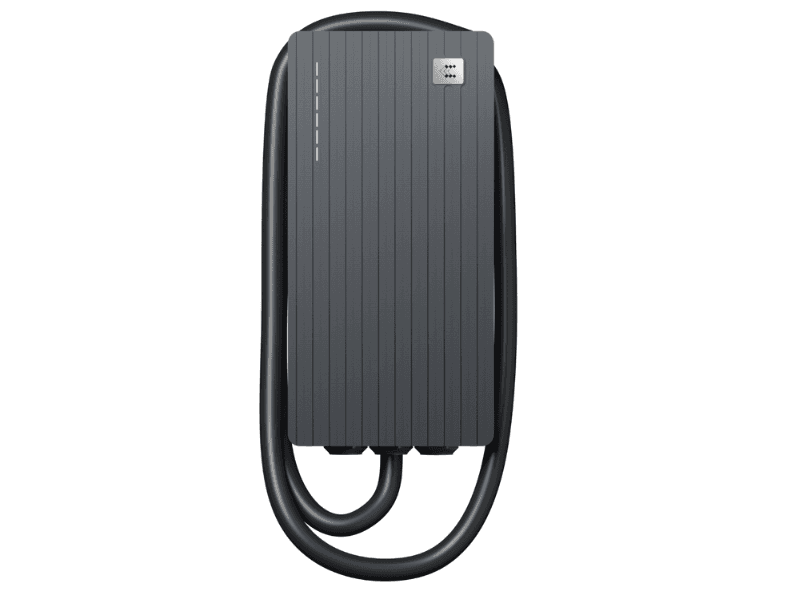
What this means for a company: for a medium or large business, no new grant source for staff charging points has been announced today. Teltonika, VOOL, SolaX and EVZONA stations in our charging station catalogue come with OCPP and dynamic load balancing, so they meet the technical requirements of the earlier calls – if the terms of a new call remain similar, you would not need to replace the equipment. See charging station installation.
Concessional loans and banks’ green products for storage and chargers
ILTE’s ‘RES loans for legal entities’ (RRF) were the main concessional instrument: up to 80 % of eligible costs excl. VAT for a private legal entity (up to 100 % for a public body), up to 15 years for solar and 20 years for wind or hybrid projects, at a 1 % margin + 6-month EURIBOR capped at 3 %. It financed solar and wind plants and batteries; the concessional rate for batteries applied only at the plant’s connection point.
Up to EUR 275 m was earmarked for storage (raised from EUR 250 m in February 2026), with up to EUR 549 m of RRF funds plus EUR 23 m from the state budget for the whole instrument. Applications were accepted until 1 March 2026 and contracts were signed until 30 June 2026; on 3 September 2026 ILTE reported 40 signed contracts financing projects worth over EUR 530 m. Unlike an ENA grant, this is a loan – the concession was the interest rate.
ILTE’s general products remain open: ‘Investment loans for business’ (from EUR 50,000, up to 15 years, market rates, terms assessed individually) and ‘Portfolio Guarantees 3’ – an 80 % guarantee on loans, credit lines and leasing up to EUR 2,812,500 via partner banks (ILTE publishes the remaining balance on its website; it changes continuously). The EUR 100 m concessional loan facility launched on 10 September 2026 covers working capital, not equipment investment.
Banks: SEB’s ‘Green micro-loan’ is explicitly for batteries and EV charging stations – from 2.9 % + 3-month EURIBOR, up to 7 years, up to EUR 40,000 unsecured or up to EUR 100,000 with an ILTE portfolio guarantee. Luminor business leasing for new equipment – from 2.10 % + 3-month EURIBOR, from EUR 8,000, up to 90 % of the price, up to 7 years. Artea offers finance leases for business equipment; term and down payment are assessed individually.
Swedbank’s ‘Renewable energy loan’ lists solar plants, wind turbines and geothermal heating in its official terms, but not batteries or chargers – check with the bank before applying. In every case the lender will usually ask for a commercial offer with a technical specification and the company’s financial statements; EVZONA prepares a quote and equipment description suitable for submission to a bank; the final rate and terms are set by the bank itself.
How to prepare so you are first to apply for storage or charging support
The budget of the 2025 storage call J06 was exhausted in three days, and ENA assesses applications in order of registration. In other words, those whose paperwork is ready before the call is announced come first. The Ministry is cutting household grants in 2026 (storage from EUR 380 to 170/kWh), so businesses should also prepare for competition over a limited budget rather than expect freely available funds.
Checklist for when a storage-device call opens: generation permit or contractor’s declaration for the plant, connection point details (capacity, operator), annual generation and consumption profile (used to size the battery and substantiate the 75 % rule), battery datasheet stating type and capacity (kWh), CE certificate, inverter compatibility confirmation, commercial offer, SME and de minimis declarations, financial statements, source of own contribution, and an account on the lea.submittable.com platform.
Charging checklist for when a call opens: a site plan with the number and type of points (wall or ground-mounted), incoming supply capacity and headroom, location of the dynamic load management meter, station specification with OCPP version and IP/IK rating, a quote from a VERT-certified contractor, and a decision on metering and staff authorisation (who can charge a vehicle and how). Earlier calls counted eligible costs from a specific date (J13 from 1 July 2024), so plan invoice and contract dates carefully.
How EVZONA helps: we select equipment to match the terms of the latest calls (LiFePO4 batteries from our energy storage catalogue, OCPP chargers with dynamic load balancing), prepare a quote based on the fixed unit rates, the technical specification and the contractor’s declaration, and carry out installation across Lithuania. We do not complete the application on your behalf, but we supply every technical annex. Start with an enquiry – we will assess your site and propose a capacity.
Energy storage: the grant is not the only argument
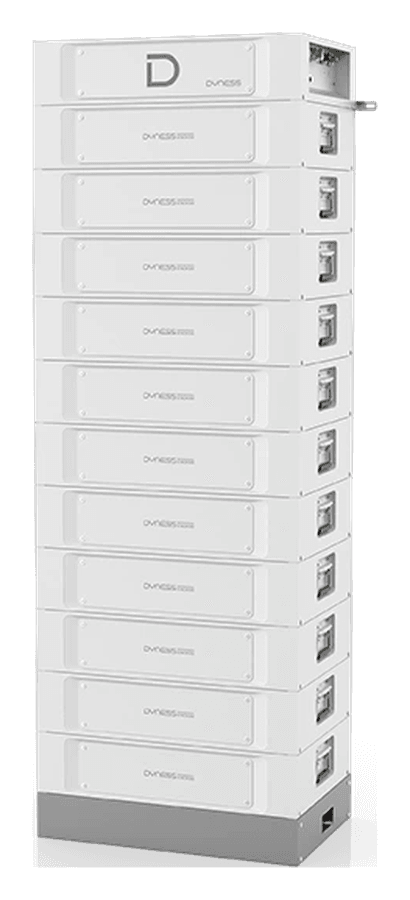
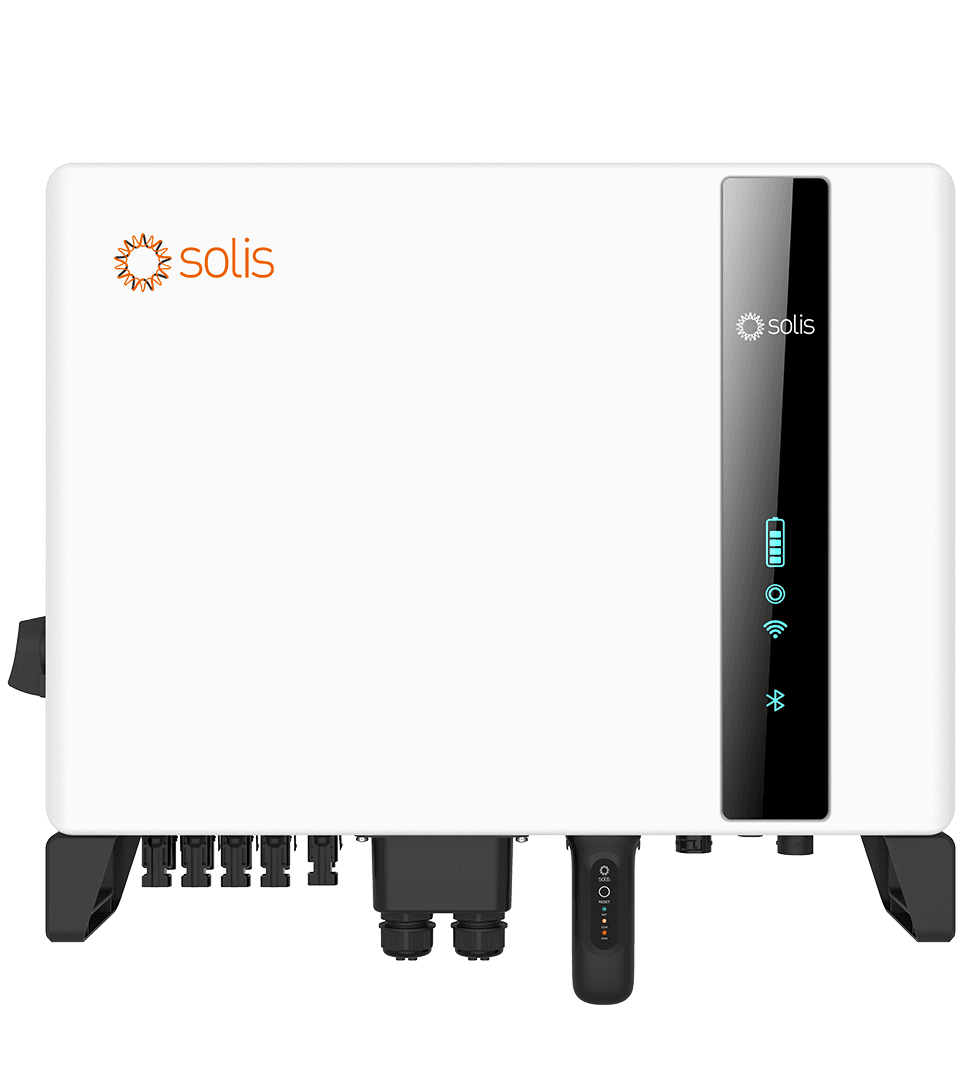
Capacity charges: for companies with a large incoming supply, a battery reduces short power peaks (compressors, welding, refrigeration) so you avoid ordering extra capacity from the grid operator. A modular Dyness STACK of up to 241 kWh per block, or SolaX, Huawei LUNA2000 and Solplanet systems with hybrid inverters of up to 30 kW each (several in parallel), let you size the system to your peak profile rather than to a grant rate.
Evening shifts and tariff spreads: if your business works in the evening or at night, or is on a two-time-zone tariff, a battery next to a solar plant shifts the daytime surplus into the evening peak. Charging stations with dynamic load balancing let you charge company vehicles from the existing supply without a capacity upgrade – often cheaper than ordering more grid capacity, grant or no grant.
We calculate payback from your actual data – hourly consumption and generation profiles, the capacity charge and tariffs – with no assumptions about grants. If a call appears, the grant simply improves the result. If you want to see the figures for your site, send an enquiry with a year’s electricity bills and your plant details, and we will prepare an answer specific to your profile.
Frequently asked questions
Is there a storage grant for businesses in 2026?
No. The last ENA call, J06, was halted on 28 March 2025 once EUR 18.24 m was exhausted, and on 14 September 2026 ENA states there are no open calls. The Ministry of Energy’s 2026 plan (30 December 2025) includes storage calls for households only (EUR 4 m for solar with storage and EUR 4 m for a separate storage call). No date for a new business call has been officially announced.
Is there a grant for company charging points in 2026?
Not at present. Workplace call J13 (up to 50 %) closed on 29 August 2025, J14 and J15 on 30 June 2025. The Social Climate Fund’s private charging measure (EUR 9.976 m, call planned for Q1 2027) is limited to vulnerable households and vulnerable micro-enterprises that bought an EV with SCF support.
Does APVA fund company charging points?
No – calls for business storage and workplace charging points were administered by the Lithuanian Energy Agency (ENA), not APVA. From Q1 2027 APVA is planned to run the SCF private charging measure C2.F.I12 for vulnerable households and vulnerable micro-enterprises (up to EUR 1,450 excl. VAT per point). If you are a company searching for APVA charging grants, the relevant source is ENA’s calls and their status.
Do farmers get storage support on the same terms as companies?
In the past ENA calls, yes: farmers whose farm had been in the Farmers’ Farm Register for at least a year received support on the same 30 % terms. According to the Ministry of Energy (8 July 2026), 67 farm projects received funding – 18.74 MWh for EUR 4.72 m. There is no open call at present.
Do you need a solar plant to get a storage grant?
In the ENA calls, yes: the battery had to be connected at the same connection point as an operating solar or wind plant, with at least 75 % of the stored energy generated by that plant. ILTE’s concessional rate also applied only to batteries next to a plant. Without applying for a grant, a battery can be installed without a plant, for example for peak shaving.
What compensation was paid for batteries and charging points?
Storage (J06): 30 % of a fixed rate – EUR 698.04/kWh excl. VAT for LiFePO4 or EUR 576.86/kWh for lithium-ion, up to 1 MWh per point. Workplace charging-point compensation: 50 % (J13, de minimis), 40 % for medium (J14) and 20 % for large enterprises (J15), on fixed rates per 7–22 kW AC point.
When will the next business call open – for storage or chargers?
There is no official date. The Ministry of Energy’s 2026 plan does not mention business storage or AC chargers, and ILTE’s call list has no new RES measure (18 September 2026). The nearest officially planned calls are the Ministry of Transport’s EUR 10 m for publicly accessible charging (planned for Q3 2026, not yet published as of 18 September 2026) and the SCF charging measures (Q1 2027). We update the status in our support hub.
Will there be charging-point support in 2027?
Only the Social Climate Fund measures are officially planned: private charging C2.F.I12 (EUR 9.976 m, up to EUR 1,450 excl. VAT per point, only for vulnerable households and vulnerable micro-enterprises that bought an EV with SCF support) and public charging C2.F.I7 – both from Q1 2027. No call for staff charging points at medium and large companies has been announced today; we do not promise dates.
Can you get a concessional ILTE loan for a battery?
Not at present: applications for ‘RES loans for legal entities’ were accepted until 1 March 2026 and contracts were signed until 30 June 2026; on 18 September 2026 the application is marked ‘temporarily inactive’. What remains are ‘Investment loans for business’ at market rates (from EUR 50,000) and ‘Portfolio Guarantees 3’ via banks, for example SEB’s ‘Green micro-loan’ up to EUR 100,000 unsecured.
Does EVZONA help with the application?
We help prepare the technical part: selecting equipment to the terms of the latest calls, preparing a quote on the fixed rates, the technical specification, battery datasheet and contractor’s declaration, and carrying out installation. The applicant submits the application in ENA’s system themselves. Start with an enquiry.
Will EVZONA batteries meet the next call’s requirements?
The exact terms will be known only once a call is published. Earlier calls required LiFePO4 or lithium-ion technology, CE marking, up to 1 MWh per point, new equipment and, for devices above 100 kW, cybersecurity compliance. Dyness, SolaX, Huawei and Solplanet LiFePO4 systems in our catalogue meet these technology criteria; we check compatibility with your inverter for each site individually.
Can installation start before the application is submitted?
In call J06, under GBER, purchase contracts and installation could not start before the application was submitted; under de minimis, works could start from 4 April 2024. Terms may differ in the next call, so the safest approach is to agree the project in advance and sign contracts after submitting the application.