Guide
Solar inverter: hybrid or grid-tied, and what power rating
The inverter is the heart of a solar power plant: it decides how much of your modules' energy reaches your home and whether you can store it.
6 min read · 8 sections
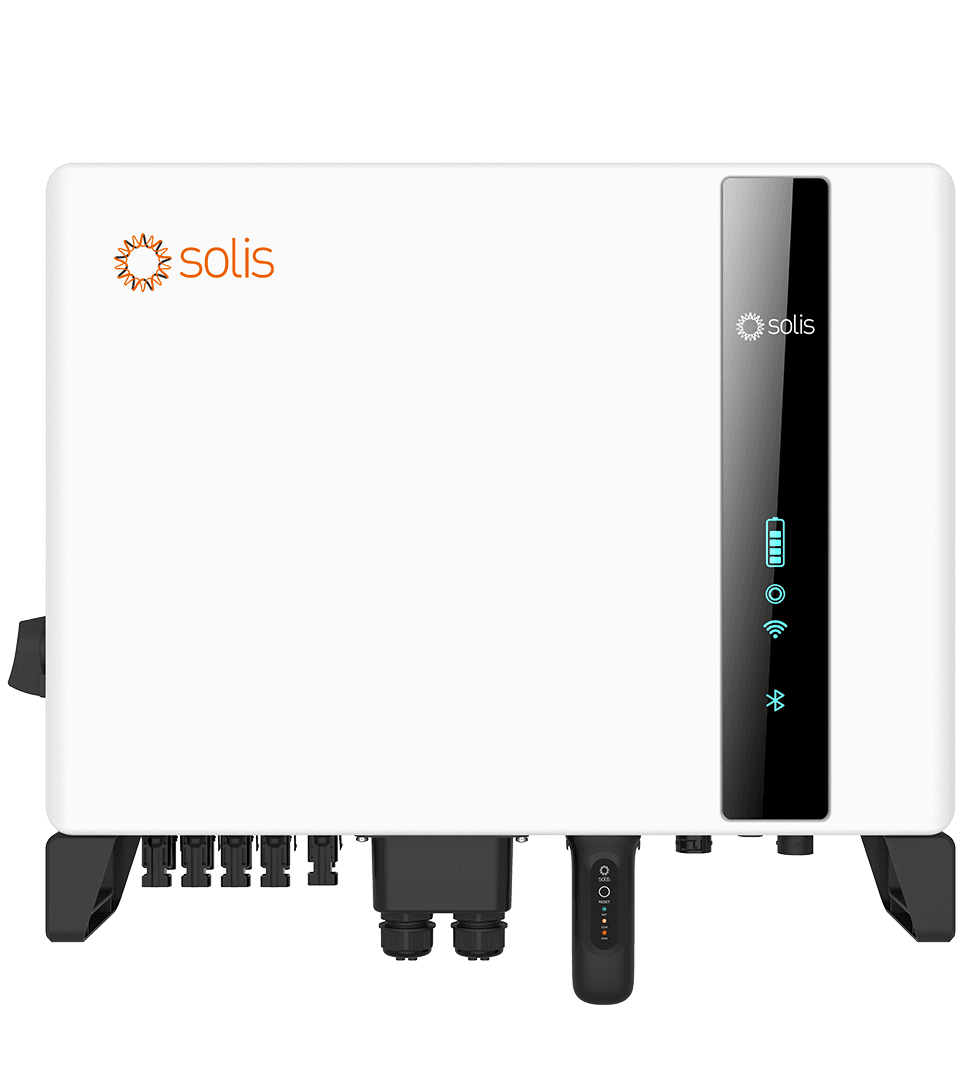
The inverter is the heart of a solar power plant: it decides how much of your modules' energy reaches your home and whether you can store it. We explain the differences between grid-tied, hybrid and battery inverters, how to choose phases and power rating, and when a hybrid is worth the extra cost; every model is in our inverter catalogue with final prices.
What an inverter and MPPT are
Solar modules produce direct current (DC), while household appliances run on alternating current (AC) – the inverter converts it and synchronises with the ESO grid. During an outage it disconnects automatically so that no voltage reaches a line under repair.
MPPT (maximum power point tracking) is a controller that continuously seeks the voltage and current combination at which the modules deliver the most power. Several independent MPPT inputs let you connect roof slopes facing different directions.
Grid-tied, hybrid or battery inverter
A grid-tied inverter is the simplest and cheapest: energy is used in the home immediately and the surplus is exported to the grid. Examples are the SolaX X3-MIC / PRO (10–30 kW) and the Solplanet ASW LT-G2 Pro (8–20 kW).
A hybrid inverter has a DC port for a battery, so it manages both the modules and the energy storage: it stores the daytime surplus and returns it to the home in the evening. A grid inverter cannot control batteries, so storage requires a hybrid or a battery inverter.
A battery inverter connects on the AC side of an existing plant, so storage can be added without replacing the grid inverter. If you already have a plant, we will advise free of charge which inverter to add.
Single-phase or three-phase
The supply is either single-phase (230 V) or three-phase (3 × 230/400 V) – check your distribution board or ESO contract, because the inverter's phase count must match it. For a single-phase supply the SolaX X1 5–6 kW fits – the grid version, or the X1-Hybrid if you plan storage.
A single-phase inverter delivers all its power through one phase and suits only smaller plants, while a three-phase unit spreads generation across three phases. For a three-phase home choose a three-phase model from 6 kW: the SolaX X3-Hybrid G4 (6–15 kW) or the Solis S6-EH3P HV (10–20 kW).
Choosing the power rating to match your modules
The inverter's AC power must not exceed the generation capacity permitted by ESO, while module power (kWp) is in practice sized up to roughly 1.3 times higher: up to ~13 kWp for a 10 kW inverter. Modules rarely reach their nameplate output, so the surplus raises generation in the morning and evening, while at noon the inverter clips the peak.
Do not exceed the DC power and MPPT limits given in the specifications. Homes take 6–15 kW hybrid models, businesses 25–100 kW, for example the grid-tied Fronius Eco 25.0-3-S (25 kW) or the hybrid SolaX X3 ULTRA (25–30 kW).
Backup power (EPS)
During an outage a grid-tied inverter must shut down, while a hybrid with storage and an EPS function switches to backup mode in an instant and supplies selected circuits. For SolaX X3 systems backup power is provided by the SolaX X3-EPS Box from accessories, while the Solis S6-EH3P and Solplanet ASW kH-T3 have the EPS function built in.
How many appliances run off-grid depends on storage capacity and backup output power, so reserve backup power for essential appliances only.
Monitoring, apps and warranty
Inverters have Wi-Fi or LAN and a manufacturer app: SolaX – SolaX Cloud, Huawei – FusionSolar, Solis – SolisCloud, Fronius – Solar.web. Once certified EVZONA electricians have connected the storage to the inverter, they commission and configure the system.
The manufacturer warranty is 5–10 years depending on the model: 10 years for most SolaX, Deye, Solplanet, Sungrow and Huawei models and the Solis HV 10 kW, 5 years for the Solis HV 12–20 kW and LV, 5–7 years for the Fronius Eco 25. The exact term is in each product's specifications, and EVZONA installation work is additionally covered by a 5-year warranty.
Price, and when a hybrid is worth paying for
Grid-tied inverters start at €693 (SolaX X1 6 kW) and hybrids at €1,432 (Solis S6-EH3P HV 10 kW); prices are final, delivery in 1–3 business days (free). The difference comes from the battery-management electronics and the EPS function.
A hybrid is worth paying for if you plan storage now or later, want backup power, or intend to apply in the planned state support call for a solar plant and storage package. If you do not plan storage, the cheaper grid-tied inverter is the more rational choice.
Checklist
1. Supply: single-phase or three-phase, and the generation capacity permitted by ESO.
2. Storage now or later – go hybrid: Solis S6-EH3P HV 10–20 kW (Dyness, Pylontech), SolaX X3-Hybrid G4 6–15 kW (SolaX T-BAT) or Deye SUN SG05LP3 10–15 kW (for LV batteries).
3. Power: module kWp up to ~1.3 × inverter kW, within the DC and MPPT limits.
4. No battery yet, with the option to add one: Huawei SUN2000-8KTL-M1 8 kW (Huawei LUNA2000); for business the Fronius Eco 25.0-3-S 25 kW.
5. Backup power: the hybrid's EPS function and the X3-EPS Box for SolaX X3 systems.
6. Warranty: 5–10-year manufacturer, 5-year workmanship – contact us and we will select the inverter free of charge.