Support
Support for a solar plant with battery and inverter: what we know about 2027
Amount not yet publishedabout €3,500 per package in ministry plans; the pilot call paid €5,012
State support for household solar is changing direction: the Ministry of Energy says new calls for residents will come in 2027 and will focus on complex solutions – a solar plant combined with a battery that keeps the home supplied when the grid fails. No new 2026 calls for solar-only or battery-only support are being announced for residents.
Here we have collected verified, dated facts only: what the ministry states officially, what the energy minister said and what the media report citing ministry information, the terms of the previous ‘solar plant + battery’ call, and why an inverter with a backup function matters in the new model. Final terms will be set by the published call, so we do not promise dates or amounts.
Planned · 2027 (being agreed with the EC)
Residents installing a solar plant together with a battery and an inverter that can power the home during an outage; the ministry is also considering households that already have a plant built without a grant
- Ministry of Energy (page ‘Calls for individuals’, checked 25 Oct 2026): new support calls for residents are planned for 2027 and will focus on a solar plant combined with a battery that keeps the home supplied when the grid fails
- The measures are being agreed with the European Commission – the funding conditions can be approved only after its consent; for households that already have a solar plant built without a grant, adding a battery and applying is being considered
- Energy Minister L. Savickas (ELTA, 15 Oct 2026): support should encourage buying the whole package – plant, suitable inverter and battery; an EC decision is expected by the end of 2026. The ELTA report mentions about €3,500 per package – the same amount the ministry’s 2026 plan (30 Dec 2025) set for packages
- Media (15 Oct 2026), citing ministry information: almost €9M for the first 2027 stage, about €19M for packages in 2027 overall, calls expected in Q1; no official document with these figures yet
- Storm package (approved by the Government on 16 Sep 2026): priority support of up to 100% for solar plants, batteries and off-grid solutions for prosumers in remote areas; funding sources and call rules not yet published
- Previous pilot call (23 Oct 2025 – 5 Jun 2026): €5,012.19 (LFP) or €4,572.30 (lithium-ion) for a plant of at least 5 kW plus a battery of at least 10 kWh, with grid export capped at 1 kW; the budget grew from €5.3M to €15.43M, plus €6.9M for the reserve list
Situation today (25 October 2026)
There are no open support calls for residents today for solar plants, energy storage or charging stations – the only active APVIS measure for individuals is EV purchase support, and APVA’s planned-calls table (updated 21 Oct 2026) lists none of these calls. The Ministry of Energy says new support calls for residents will be announced in 2027: funding will focus on a solar plant combined with a battery that keeps the home supplied when the grid fails, and the terms will be approved only after the European Commission’s consent. Social Climate Fund measures, including private charging points, are planned from 2027 (the agreement with the EC was signed on 30 Sep 2026). Previous household calls were for people who had already installed their systems, and funds ran out within one or a few days, so it pays to install and prepare the paperwork in advance.
Summary: what is known at the end of October 2026
Officially (enmin.lrv.lt, checked 25 Oct 2026): new support calls for residents are planned for 2027; funding goes to solar plants combined with batteries that keep the home supplied during outages; the funding conditions will be approved only after the European Commission’s consent. Energy Minister L. Savickas said on 15 Oct 2026 that an EC decision is expected by the end of the year.
| Item | Pilot call 2025–2026 | 2027 plan |
|---|---|---|
| What is funded | Solar plant (5–100 kW) and battery (10–100 kWh) together | Solar plant and battery able to power the home during an outage |
| Support | €5,012.19 (LFP battery) or €4,572.30 (lithium-ion) | About €3,500 per package (ELTA, 15 Oct 2026; same as the 2026 plan) |
| Grid condition | Grid export capped at 1 kW for 2 years | Not yet published |
| Budget | €5.3M → €15.43M plus €6.9M for the reserve list | Media: almost €9M for the first stage, about €19M in 2027 |
| Status | Closed on 5 June 2026 | Being agreed with the EC, calls in 2027 |
Citing ministry information, the media expect the calls in Q1 2027, but the ministry itself names no quarter, and planned funds are not yet a guaranteed grant. We check the status in official sources and update it in our support hub.
Why 2027 funds the whole package: plant, inverter and battery
On 15 Oct 2026 Energy Minister L. Savickas said that of roughly 200,000 prosumers only 15,000–16,000 can run in island mode, i.e. power the home when the grid goes down. Support should therefore encourage the whole package – not just panels on the roof, but a suitable inverter and battery too. The long-term ambition, according to the minister, is over €100M of support and about 30,000 new prosumers.
On 16 Sep 2026 the Government approved the so-called Storm package: prosumers living in remote and hard-to-reach areas are to receive priority support of up to 100% for solar plants, batteries and off-grid solutions, reaching about 30,000 consumers. Funding sources and call rules for this direction have not been published, and it has not been officially linked to the 2027 package support.
Why an inverter with a backup function matters
An ordinary grid-tied inverter must shut down during an outage, so a solar plant without storage cannot power the home even on a sunny day, and a battery alone does not guarantee power either. For the home to keep running off-grid you need a hybrid inverter with a backup (EPS) function, a compatible battery and a separate backup circuit in the distribution board. Citing ministry information, the media report that such systems are what 2027 support will target.
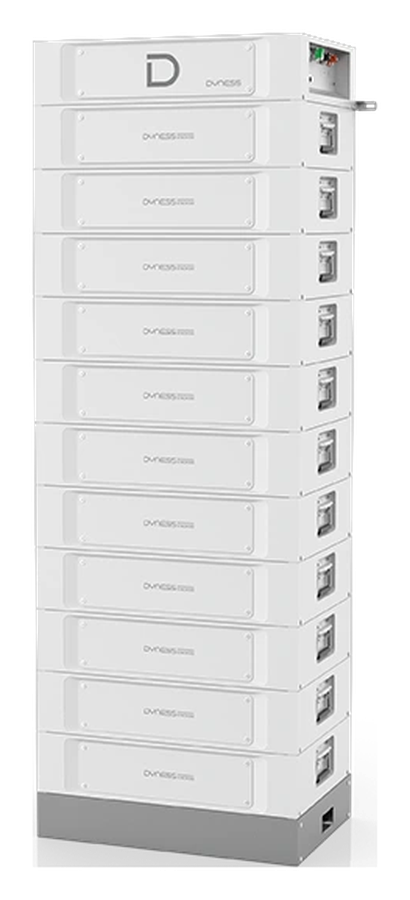
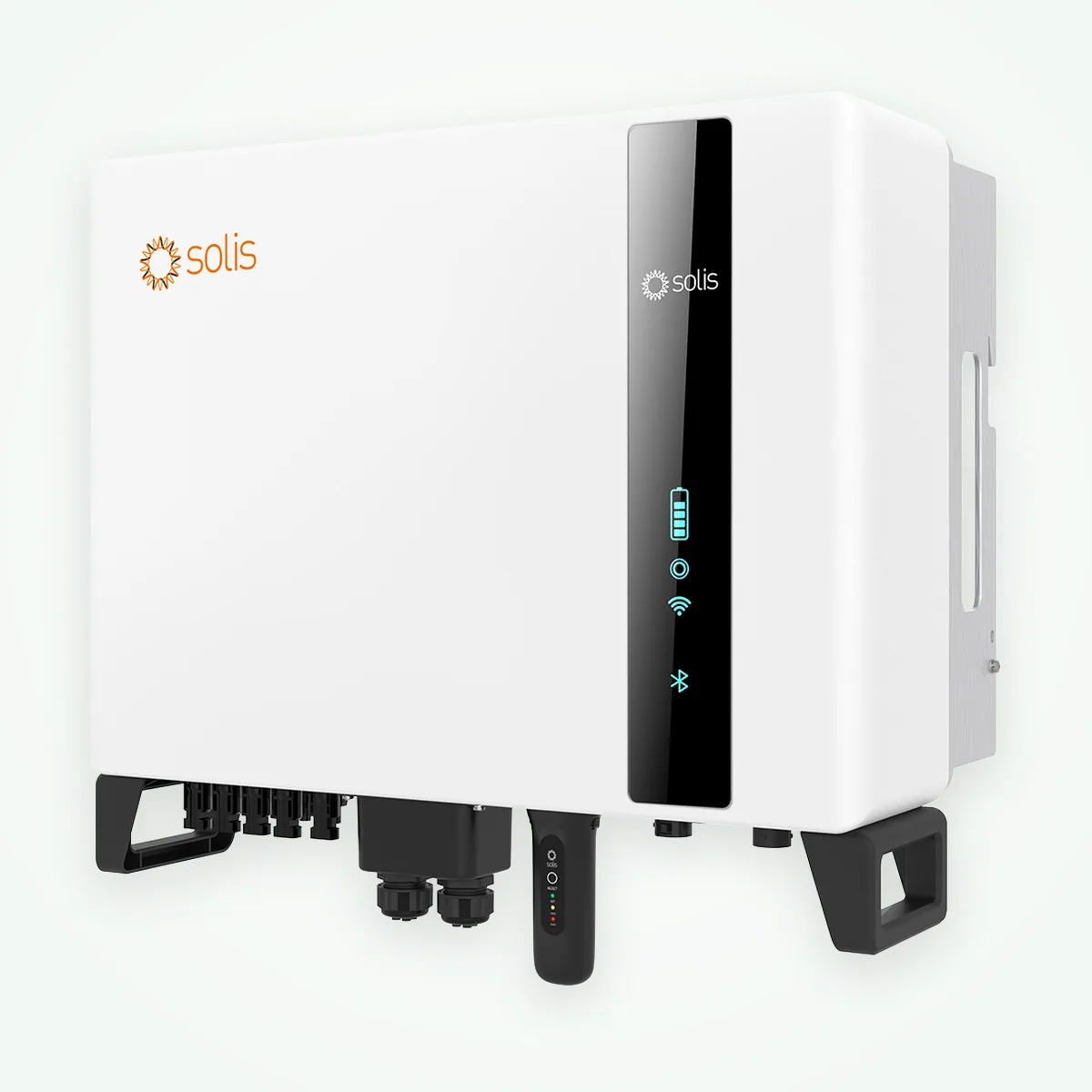
The pilot call did not formally require a hybrid inverter – a CE-marked inverter suitable for solar plants with at least a 5-year warranty was enough. The new call’s technical requirements are not yet published. If you are choosing equipment now, pick a hybrid inverter with a backup function that is on the battery maker’s compatibility list – for example the Solis S6-EH3P, Deye SUN SG05LP3, SolaX X3-Hybrid G4 or Solplanet ASW kH-T3 from our inverter catalogue – and a battery from our storage catalogue.
The previous ‘solar plant + battery’ call: terms and results
The pilot call was initiated by the Ministry of Energy, administered by APVA and funded by the state. Applications opened on 23 Oct 2025; the grant was a fixed €5,012.19 with an LFP battery or €4,572.30 with a lithium-ion battery. Applicants had to install a solar plant of at least 5 kW (up to 100 kW) and a battery of at least 10 kWh (up to 100 kWh) on the same electricity consumption site, with permitted grid export of no more than 1 kW, kept for 2 years. A plant alone or a battery alone was not funded.
The call was for households that had already installed the system: the application and payment claim were submitted via APVIS only after full installation, equipment had to be bought and installed no earlier than 1 Sep 2025, and ESO’s updated ownership-boundary act had to be obtained before applying. Claims worth €3.2M arrived in the first month; on 30 Jan 2026 the ministry added €10.13M (the call grew to €15.43M) and on 4 Jun 2026 another €6.9M for reserve-list applicants. The reserve list closed on 5 June 2026; more than a thousand residents became prosumers under the measure.
How to prepare in advance
Previous household calls were for people who had already installed their systems, and funds ran out within one or a few days: the pilot call accepted equipment installed from 1 Sep 2025 although it opened on 23 Oct 2025, and the 2025 storage calls accepted installations from 7 Jan 2025. That is why it pays to install and prepare the paperwork in advance. The eligible-cost start date for the new call will be set by its funding conditions.
Choose a system that fits both the earlier calls and the new model: plant and battery on the same site, a new CE-marked LFP battery, a hybrid inverter with a backup function, and a certified contractor who declares the installation to ESO. Keep the invoices, the equipment handover act, the contractor’s declaration, ESO’s ownership-boundary act, technical documents and photos of the installed system. We prepare the technical and warranty documents our customers need for the application.
Already have a solar plant? Adding a battery
The Ministry of Energy states that for residents who already have a solar plant but have not received support, it is considering allowing them to add a battery and apply for funding. This is not yet a decision – the terms will become clear with the funding conditions.
Technically a battery is added to an existing plant through a hybrid inverter: if your plant runs on a grid-tied inverter, it is replaced with a hybrid one, and the battery is chosen from that inverter maker’s compatibility list. Send us your inverter model – we will assess free of charge whether the battery can be connected to it or whether it needs replacing.
Sources
Ministry of Energy, ‘Calls for individuals’ (checked 25 Oct 2026): enmin.lrv.lt. ELTA, L. Savickas on prosumer support (15 Oct 2026): jp.lt. Ministry of Energy, Government approved the Storm package (16 Sep 2026): enmin.lrv.lt. APVIS, pilot call description: apvis.apva.lt. APVA, extra €6.9M for the reserve list (4 Jun 2026): apva.lrv.lt. Ministry of Energy, planned 2026 calls (30 Dec 2025): enmin.lrv.lt. APVA planned calls (checked 25 Oct 2026): apva.lrv.lt. Media on the 2027 plans (15 Oct 2026): kaipkada.lt.
Frequently asked questions
Will there be support for a solar plant with a battery in 2026?
According to the Ministry of Energy, no: new support calls for residents are planned for 2027. The pilot ‘solar plant + battery’ call closed on 5 June 2026, and APVA’s planned-calls table (updated 21 Oct 2026) contains no household solar or storage calls.
How much will a solar plant with a battery receive?
The final amount has not been published. An ELTA report (15 Oct 2026) says support for the whole package could reach about €3,500; the ministry’s 2026 plan set the same €3,500 for packages. The pilot call paid €5,012.19 (LFP battery) or €4,572.30 (lithium-ion).
When will the call open?
The ministry says 2027; citing ministry information, the media expect Q1. The funding conditions will be approved only after the European Commission’s consent, which is expected by the end of 2026. We update the status in our support hub.
Will a solar plant alone be funded?
Under the planned model, no: funding goes to a solar plant combined with a battery so that the home keeps power during outages. The last solar-only call (9 June 2026, €13M) was exhausted on its first day with more than 11,000 applications.
Can I get support for a battery if I already have a solar plant?
Possibly. The ministry is considering allowing residents who have a solar plant but received no support to add a battery and apply. The exact terms will be known only from the funding conditions.
Will a hybrid inverter be required?
Technical requirements have not been published, but the new model targets systems that can power the home during an outage – that takes a hybrid inverter with a backup function, a compatible battery and a properly wired distribution board. The pilot call did not formally require a hybrid inverter.